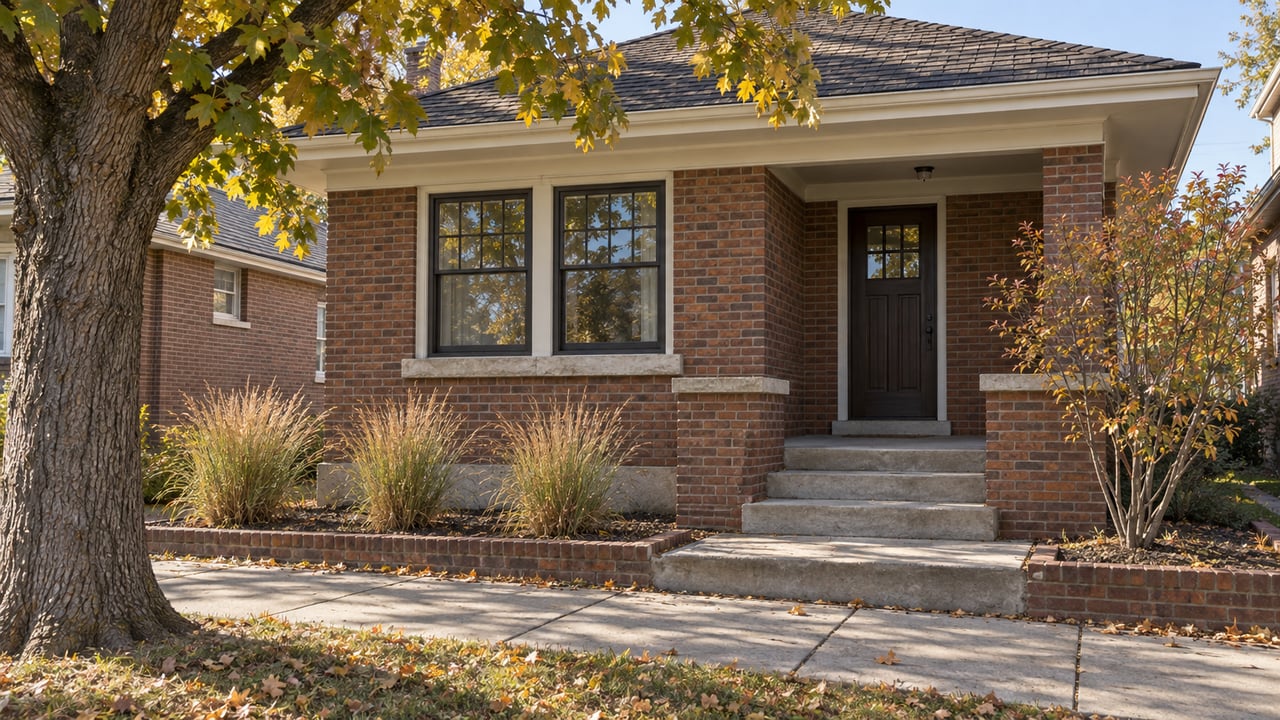
Say you're the one who gets the call. A parent has passed, and the house is the 1928 Craftsman bungalow on a tree-lined block near South Gaylord or South Pearl, the one with the original woodwork and the porch that's needed paint since before you moved out. You've been named personal representative. Your first assumption is that the hard part will be the paperwork: the court filing, the will, the waiting.
That's not where this gets difficult. The paperwork is procedural and mostly predictable. What actually controls your timeline, and what nobody explains until you're already three months in, is that you're managing two separate clocks that don't run at the same speed, and the second one is set by the house itself.
Why the small-estate affidavit doesn't cover a house like this one
Colorado's Uniform Probate Code gives personal representatives fairly broad authority once they're appointed, and much of the process can move without a judge signing off on every step. But almost none of that flexibility helps you skip probate entirely if your parent owned the bungalow alone. Settled Estate explains that Colorado's small-estate affidavit process, capped at $88,000 for deaths in 2026, exists to let heirs collect bank accounts and personal belongings without going to court. It does not reach real estate.
If your parent held the house jointly with a spouse, or recorded a beneficiary deed before passing, you may already have a path around this. If not, you're filing with the Denver Probate Court, which has exclusive jurisdiction over Denver County estates and requires attorneys to file electronically. Those Letters are the hinge the entire sale swings on.
The two clocks
Once you have those Letters, most of what you read online treats the rest as a straight line: list the house, sell it, distribute the proceeds. In practice you're running two clocks, and they rarely finish together.
| Clock 1: The creditor claim period | Clock 2: The house's own condition clock | |
|---|---|---|
| What sets it | Colorado's statutory deadline for creditors to file claims after notice is published | Whatever an inspection finds once a buyer is under contract |
| Typical duration | A statutory claim period applies | Variable, but often adds 2 to 6 weeks of renegotiation on homes built before 1940 |
| Can you speed it up | The deadline is set by statute | Only by knowing what's behind the walls before you list |
| What happens if you ignore it | Final distribution to heirs gets delayed | Buyers walk, or the price drops mid-contract |
The first clock is well documented. The second one is specific to houses like this, and it's the one that catches personal representatives off guard.
Wash Park's single-family stock was built overwhelmingly between 1905 and 1940. That's not incidental to the estate sale. Denver neighborhoods built before modern plumbing standards existed, Washington Park among them, were commonly plumbed with galvanized steel supply lines and cast-iron drain pipe, and many of these homes still rely on original or only partially updated systems. Denver-area home inspectors describe the same pattern across the metro's older housing stock: a single house can show modern copper or PEX in one area, older galvanized piping in another, cast iron drains below the slab, and a partially replaced sewer line outside, all coexisting in the same structure. The house looks renovated from the kitchen forward. The plumbing behind the walls tells a different story, and a standard walkthrough won't surface it. A sewer scope will.
That's Clock 2, and it doesn't start running until a buyer's inspector finds it. If it surfaces after you're already under contract, you're renegotiating price or repairs on the estate's dime, while Clock 1 keeps ticking underneath you regardless.
The disclosure paradox
Here's the part that's specific to estate sales, and it's the reason the second clock hits harder for a personal representative than it would for an ordinary seller.
Colorado's Seller's Property Disclosure form only requires you to report what you actually know. The form's own language limits the seller's obligation to "current actual knowledge," not what a thorough owner would have known or should have investigated. That's a reasonable standard for someone who's lived in a house for thirty years and watched it age. It's a much thinner standard for an adult child who grew up visiting on weekends and never once touched the water heater.
You are legally allowed to disclose less than your parent could have. You are also, in a Wash Park bungalow specifically, far more likely to be sitting on undisclosed conditions that matter, because this is precisely the housing stock where original systems hide behind cosmetic updates. The paradox is that the sale where disclosure matters most is the one where the seller has the least ability to provide it.
This isn't a reason to guess or overstate what you know. It's a reason to find out before you list, not after an inspector does it for you on the buyer's clock. A pre-listing sewer scope and a plumbing and electrical assessment cost a few hundred dollars and turn an unknown into a known. Known conditions get priced into an offer up front. Unknown conditions get renegotiated after everyone's already emotionally and financially committed.
One more detail that matters for anyone filing now: the Colorado Real Estate Commission's contract and disclosure forms were updated for mandatory use as of January 1, 2026, including the residential Seller's Property Disclosure form. If you or your attorney are working from an older template, or from a form a well-meaning family friend saved from a previous sale, you're not using the version Denver title companies and brokers are expecting this year.
The basis reset nobody connects to the disclosure gap
Here's the piece that ties this all together, and it's the reason families in this situation so often wait rather than act sooner.
When a house passes through an estate rather than being gifted during the owner's lifetime, the tax code resets its cost basis to the property's value on the date of death. For a bungalow purchased decades ago at a fraction of its current value, that reset can erase what would otherwise be a substantial capital gain if the original owner had sold or gifted the home while still living. It's a real, well-understood reason families let a parent keep the deed rather than transfer it early, even when transferring early would have sidestepped probate entirely.
But the same event that resets the tax basis also resets institutional knowledge of the house to zero. The stepped-up basis is a genuine financial benefit to the estate. The flip side is that the person who benefits from it is, by definition, the person least equipped to disclose what's actually going on with the plumbing behind that 1962 kitchen remodel. Families optimize for the tax outcome without realizing they're also inheriting the information gap that makes the sale harder to close cleanly.
A practical order of operations
For a personal representative or trustee handling a Wash Park, Bonnie Brae, or Platt Park bungalow, the sequence that avoids the worst version of this looks like:
- Get your Letters Testamentary or Letters of Administration before you talk to a single buyer, agent, or title company.
- Order a title commitment early. It will surface old mortgages, mechanic's liens, or unpaid property taxes that would otherwise derail closing at the worst possible moment.
- Schedule a sewer scope and a basic plumbing and electrical assessment before you list, not after an inspector finds something during someone else's contract.
- Fill out the current 2026 Seller's Property Disclosure honestly and completely, noting where your knowledge is limited rather than guessing.
- Keep the creditor claim period in view when you set expectations with heirs about final distribution. The Colorado Revised Statutes generally give a personal representative authority to list and sign a contract during that period.
Frequently asked questions
Can I sell the house before probate is fully closed? Often, yes. Once you hold Letters Testamentary or Letters of Administration, you generally have authority to list and sign a contract.
Does the small-estate affidavit help if the house is the only asset of real value? No. Colorado's small-estate affidavit, capped at $88,000 for 2026 deaths, applies only to personal property. A home titled solely in the decedent's name still requires probate no matter how the rest of the estate is valued.
What if I genuinely don't know whether the plumbing has been updated? Say so on the disclosure form, which only asks for what you actually know, not what a longtime owner might have discovered over decades of living there. A pre-listing sewer scope and mechanical assessment turn an honest unknown into a documented known, which protects both you and the buyer.
Settling an estate on a house like this is rarely just a legal process or just a property condition issue. It's both, running on different clocks, and the families who come through it with the least friction are the ones who get ahead of the slower one. If you're a personal representative, trustee, or family member facing this in Wash Park, Bonnie Brae, or Platt Park, Wadsworth Property Group works through these transactions with the legal sequencing and the vendor coordination in view from the start. Request a Free Home Valuation & Consultation and we'll walk the specific timeline for your situation before you list anything.
This article is general information, not legal, tax or financial advice. Consult a qualified professional about your situation.