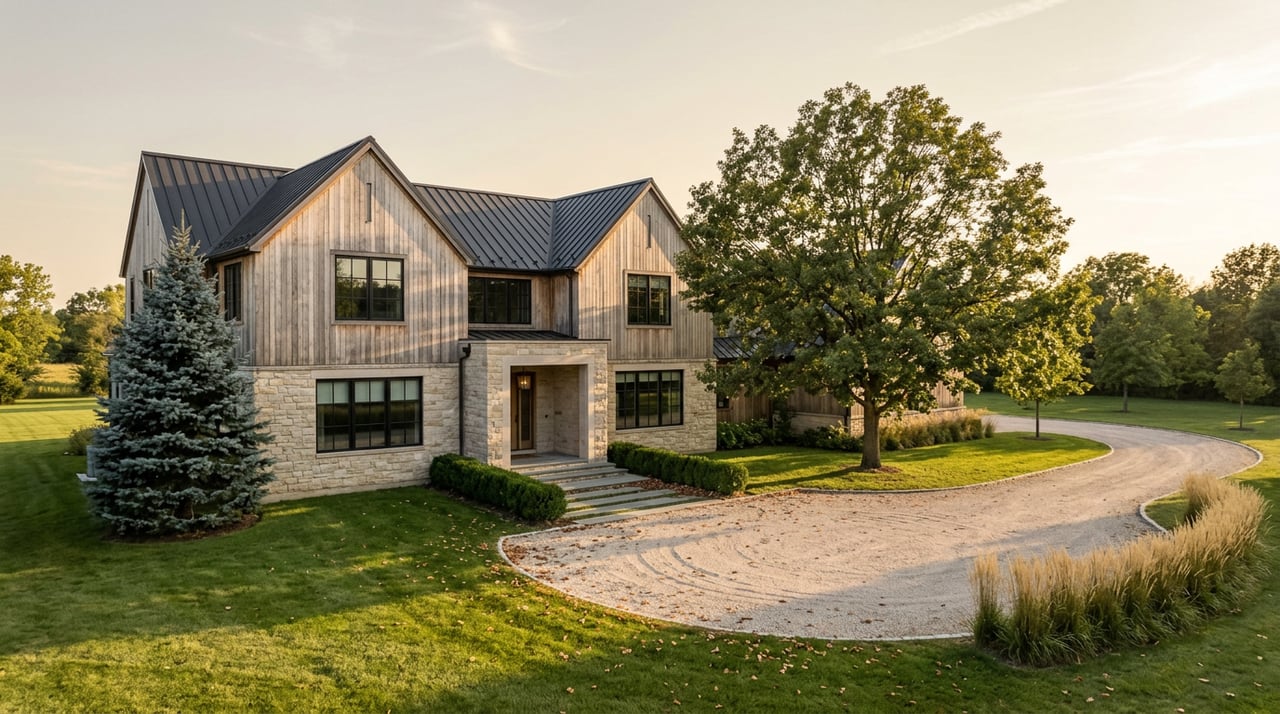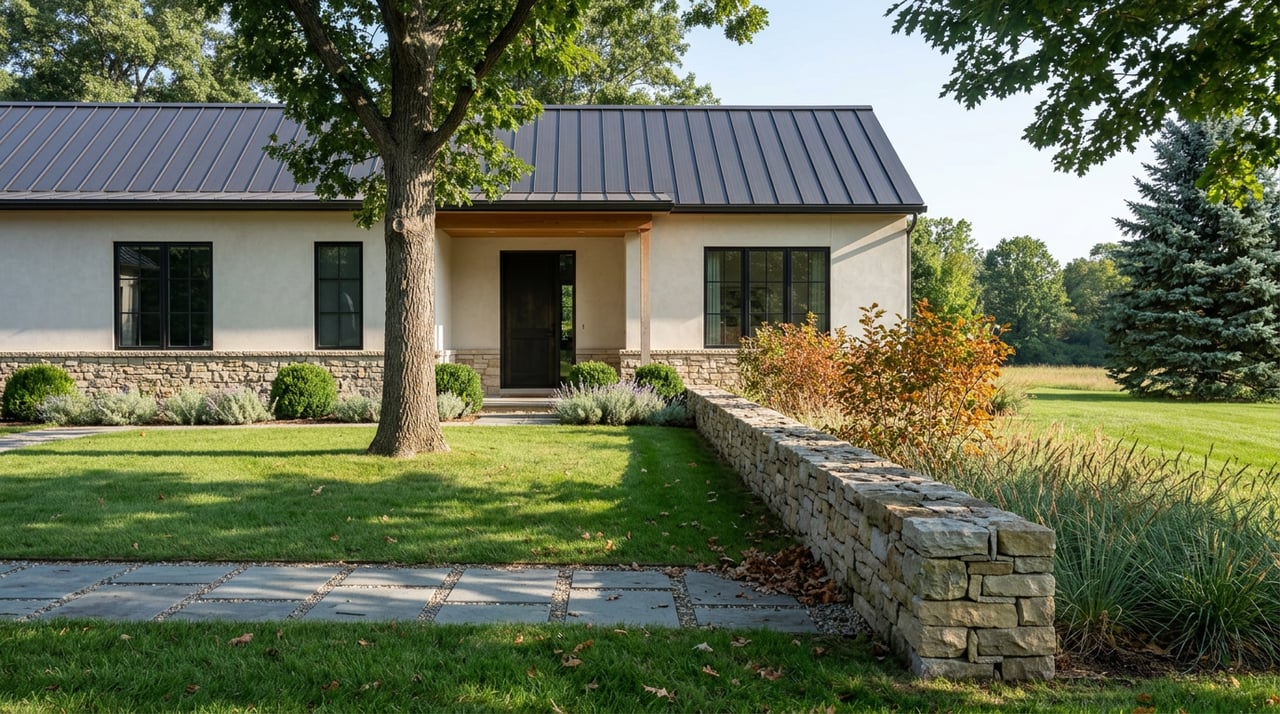
Cherry Hills Village has no Main Street. No coffee shop row, no strip of storefronts, no place where you'd naturally run into three neighbors on a Saturday morning without planning it. The city was incorporated in 1945 specifically to keep it that way, and it has held the line for eighty years. If you've lived here for more than a season, you already know this. What you may not have connected is where all that displaced social gravity actually lands.
It lands on a farm. A specific, 17.5-acre, publicly owned farm on the west side of the High Line Canal, and this September it's doing more of the neighborhood's civic work than anywhere else in the city, including City Hall.
A Quarter of the City's Open Space Is One Property
Quincy Farm was donated to the City of Cherry Hills Village by Catherine "Cat" Anderson, who placed it under a conservation easement before handing it over, permanently protecting the land from future development. It's listed on the National Register of Historic Places, and it holds the only 19th-century farmhouse left in the area alongside a 1930s barn. Denver Water's High Line Canal runs right along its edge.
Here's the number that puts it in perspective: Quincy Farm accounts for 24 percent of all public open space and parkland the City of Cherry Hills Village owns. Not 24 percent of the trails, or 24 percent of the parks budget. That gives the farm an outsized role in a city whose public amenities are otherwise spread across trails and parkland. In a city with over 30 miles of trails and 47 acres of parkland spread across 6.5 square miles, that concentration is unusual, and it's the reason a working farm rather than a plaza or a green has become the default answer to "where does everyone go."
The Barn Reopened, and It's Different Now
For years the farm's centerpiece barn, built in the 1930s, was structurally compromised. The city contracted with Rogue Architecture to draw up a rehabilitation plan that stabilized the building while preserving its original horse stalls, and construction moved through 2024 and into 2025. The result, based on the Land Preserve's own account of the year, was the Big Barn Grand Reopening in 2025, alongside what the organization called a record number of family programs, adult workshops, and speaker events. Cherry Hills Land Preserve, the nonprofit that partners with the city to run programming at the farm, counted over 1,600 visitors to its events that season.
That's not a small number for a city of roughly 6,400 residents. It means a meaningful share of the population walked through this one barn's doors in a single year, for reasons that had nothing to do with real estate, city council, or anything transactional. They went for a workshop, a family program, a speaker. The barn gave them a reason.
A Bridge and a Pond, Both Finished This Year
Two smaller projects closed out on the farm's edges in 2026, and together they say something about how deliberately the city treats this property.
The wooden pedestrian bridge connecting Quincy Farm to the High Line Canal trail was replaced this summer. The city didn't modernize it. It rebuilt the bridge to match the historic character of the original footbridge, which is a choice that costs more time and more money than a standard replacement would, and it was made anyway.
At the same time, the farm's 1930s irrigation pond, which sits right next to the Canal and had grown shallow and choked with sediment over the decades, went through a full habitat rehabilitation. The work was partly funded by a $241,000 grant from Arapahoe County Open Space. Dredging finished in fall 2025, and the replanting around the pond's edges wrapped up in spring 2026. The goal wasn't to make the pond bigger. It was to make it deeper and healthier, so the birds and wildlife that already use it as a stop along the Canal corridor have better water quality to come back to.
None of this is the kind of infrastructure spending a city does for a park nobody visits. It's the kind of spending a city does for the place its residents have already voted with their feet to treat as the center of things.
One Month Carries the Whole Calendar
Here's the part that changes how you should think about your fall calendar if you live here. Almost the entire civic and social weight of the year in Cherry Hills Village lands in a single four-week stretch, and city staff themselves have said so, on the record, while trying to schedule something else.
In minutes from a Cherry Hills Village Art Commission meeting, staff recommended against holding an art show event in September for a simple reason: too much else was already claiming that month. Specifically, three of the city's biggest annual draws all land in September:
- The Exotic Car Show, now run by the Cherry Hills Village Police Foundation, held in the City Hall parking lot with free admission, food, and music, with proceeds going toward department equipment, training, wellness programs, and the K9 unit. It started as a small event in 2022 and is still young as neighborhood traditions go, typically held the first week of the month when the weather cooperates.
- The Cherry Hills Land Preserve Barn Party, the organization's largest annual fundraiser, held at Quincy Farm's newly reopened barn, with a silent auction, live music, and western-inspired vendors.
- The High Line Canal Conservancy's annual fundraiser, supporting the nonprofit that coordinates trail improvements, tree planting, and stewardship across all 71 miles of the Canal, a meaningful share of which runs directly through this city.
Staff weren't complaining about too many good options. They were pointing out a genuine scheduling constraint: there's a narrow window in early fall when the weather, the volunteer calendars of three different nonprofits, and the farm's own outdoor capacity all line up, and everyone is trying to use it at once.
What a Farm-Centered Calendar Actually Tells You
If Cherry Hills Village had a commercial district, this wouldn't happen. A Main Street absorbs events year-round because it has a dozen venues, a dozen storefronts, a dozen small excuses to gather in February as easily as September. A city built around one farm and one canal doesn't have that flexibility. The outdoor season is short, the venues are limited, and the volunteer organizations that run these events are drawing from the same relatively small pool of residents and board members.
That's not a flaw in how the city is run. It's a direct consequence of the choice CHV made back in 1945 and has kept making ever since: no commercial development inside city limits, full stop. The tradeoff for that quiet, that privacy, and those wide lots is a community calendar that bunches up rather than spreading out. If you want to catch the Barn Party, the Car Show, and a walk past the newly finished pond habitat, you're doing it all in the same few weeks, because that's when the city's shared life actually happens.
Knowing that changes how you plan the season. It also explains something that can otherwise feel strange about living here: long stretches where nothing civic seems to be happening, followed by a September where it feels like the whole city shows up at once. It's not random. It's the shape of a place that decided, deliberately, not to have a Main Street, and then had to figure out where all that energy would go instead. It went to a farm.
If you're weighing a move within Cherry Hills Village, or trying to explain to someone outside it why the neighborhood works the way it does, this kind of detail says more than a listing description ever could. Wadsworth Property Group spends its time in neighborhoods like this one for exactly this reason, and Nicole Wadsworth is always glad to talk through what a place like Cherry Hills Village actually feels like to live in, whether or not a move is anywhere on your horizon yet.
This article is general information, not legal, tax or financial advice. Consult a qualified professional about your situation.